This past weekend we held the first ever AmeriHac, a ZuriHac-style hackathon for the North American Haskell community. When I first proposed the idea of a North American event to the HF board, my criterion for success was simple: 100 attendees. We had 110, so by that measure we succeeded. But numbers are only part of the story, of course.
The Event
Jane Street hosted us at their offices in New York, it’s difficult to overstate how much we appreciate their generosity. The food was exemplary, the space was more than sufficient, and the staff were welcoming throughout. I want to call out Richard Eisenberg, who was instrumental in making the venue happen, and I’m very grateful.
We had folks from all over: East and West coasts, Colorado, Michigan, Canada (not just me!), UK, The Netherlands, and even one attendee from Argentina! It’s clear that there was an appetite for such an event. Here’s an impromptu group photo:

These events are a great way to catch up with Haskellers that you’ve interacted with online for a while, but only meet rarely, if ever. It’s also a great way to be introduced to the Haskell community. Richard mentioned that five or so people came up to him saying something like, “I’ve been into Haskell for a few years, but this is the first time I’ve actually met another Haskeller in person.” That, to me, is the whole point. There is clearly pent-up demand for this kind of gathering.
Talks and Hacking
The morning keynotes worked well, both as a way to get the day started and as a community touchstone. Each talk generated a good amount of discussion, with speakers being surrounded by attendees afterwards. This is great!

There were some healthy groups of folks working on projects togeher. GHC, Hackage, Transformers-MTL, Data-Haskell, folks working on Zero-Knowledge Proofs, among others. @sclv did a great job helping folks get acquainted with the Hackage codebase, thank you!
Gershom informally did exactly this by spending much of his time helping folks get started with the Hackage codebase, and I’m very appreciative of him for that. I’ll be sending out a survey to gather more opinions on this, but my instinct is that we should experiment with the format next year.
Some Lessons
The number one question I got all weekend was “will you be doing this again next year?”, so in that spirit, let’s talk about some lessons we learned:
Advertise to students directly: Aside from a contingent of UMD students (the group shown below decided to port their course compiler to Haskell), there weren’t many students around. I think this was a missed opportunity. We should target student communities and forums for advertising next year.

Have an explicit beginner track: The lack of a beginner track was shortsighted. While I do believe that the self-organization of the event is one of its charms, beginners don’t know enough to know what they’re interested in or maybe don’t even know Haskell well enough to do much! Next year we should have an explicit beginner track with a tutorial or starter project, just like ZuriHac does.
Encourage ‘good first tickets’: Because we asked about it on our registration form, we had some idea of which projects would be represented. One thing we should have done is ask those projects ahead of time to set up some ‘good first ticket’ issues specifically so that newcomers could quickly grab onto something to work on. Some projects had this, and that was great. We should anticipate this is useful and give a heads up in advance.
Coordinate with non-present maintainers: Andreas and Rodrigo of the GHC team were indispensable during the event and they weren’t even present! It did not occur to me until the event was unfolding that there may be increased demands on certain maintainers during the hackathon and that them being ‘on call’ would be useful. Of course they don’t have to be, but a heads up would likely be appreciated.
Thank You
I want to thank Jane Street for their extraordinary hospitality, Richard for making the venue happen, all of the board members who attended and provided feedback, our sponsors, and every single person who showed up.
If this was your first Haskell event, I hope it wasn’t your last!
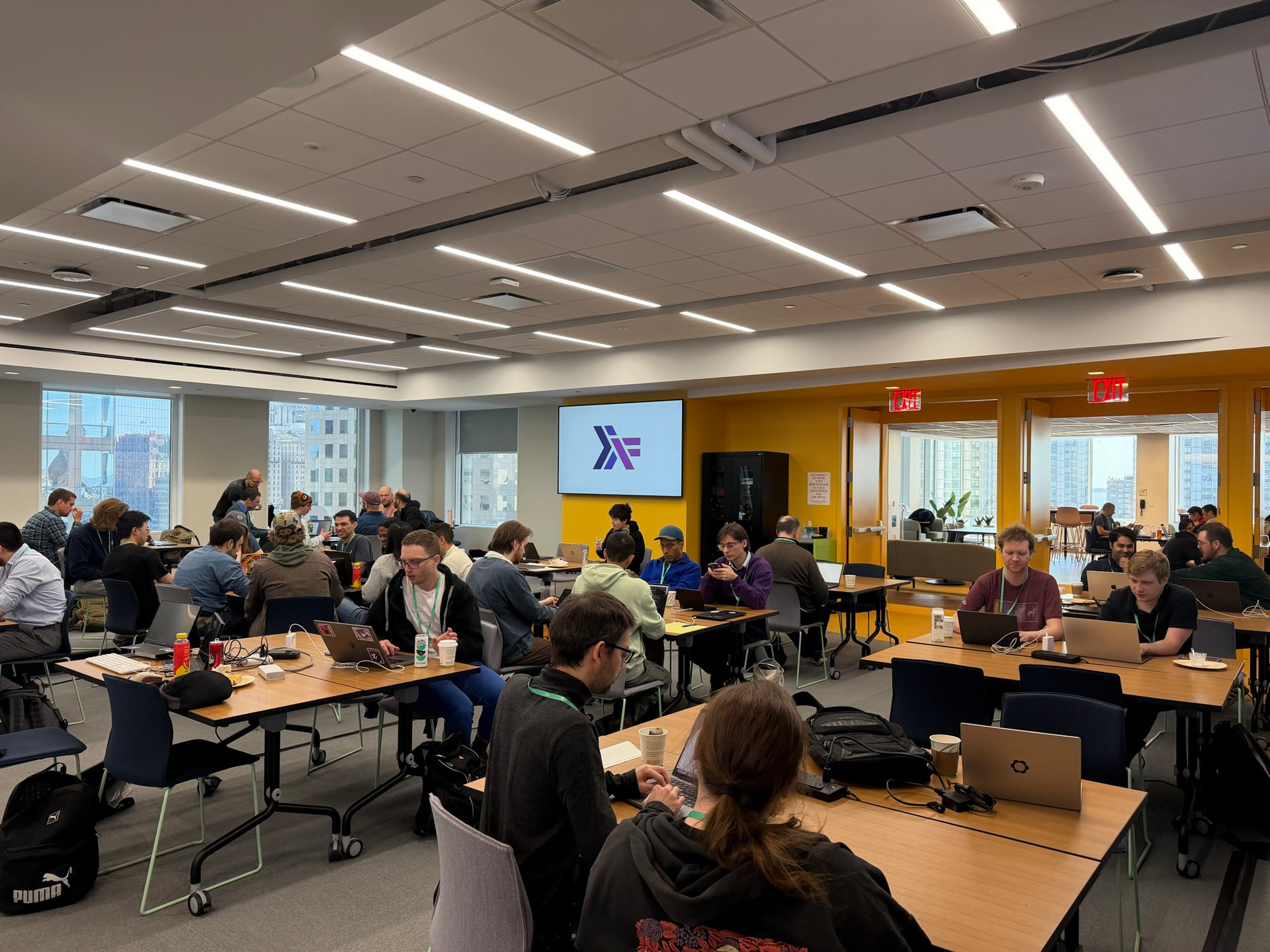
Folks hacking:
-Jose
P.S. one attendee already wrote about their experience at the event: My experience at AmeriHac - Sai Divvela: Formally Verified Nonsense